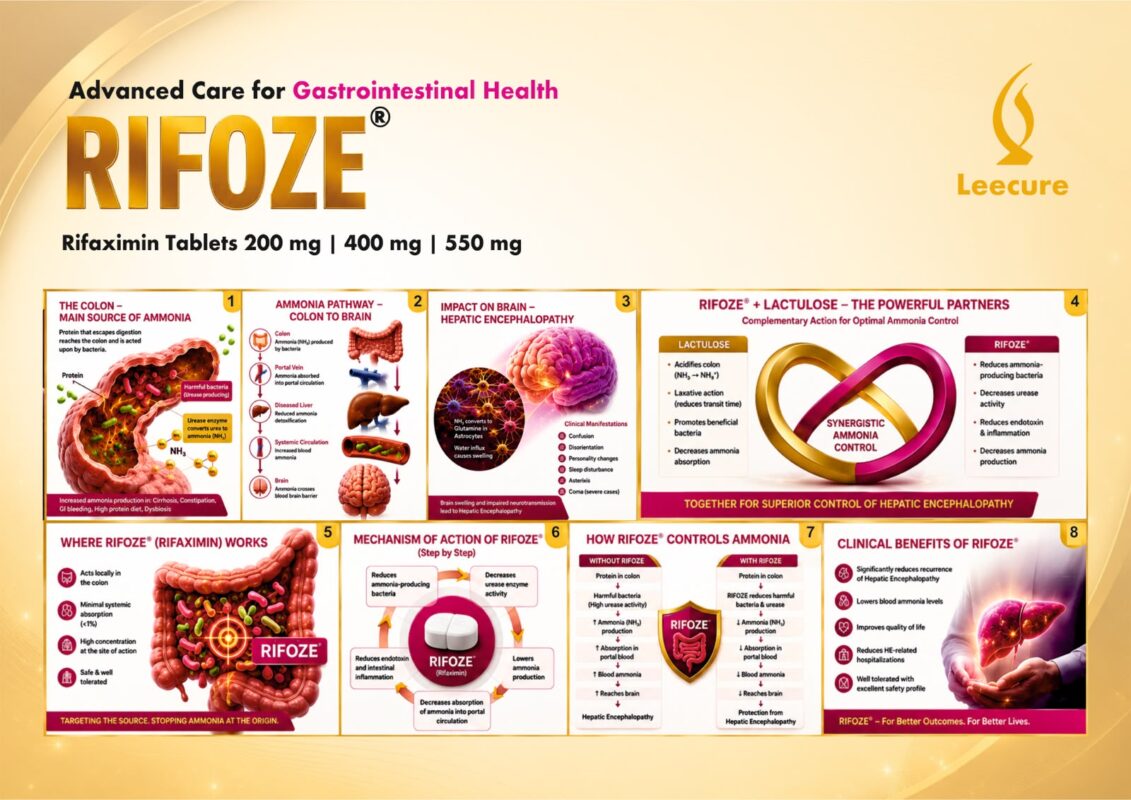









Rifaximin is an effective, minimally absorbed oral antibiotic used to prevent recurrence and improve outcomes in hepatic encephalopathy, typically as an adjunct to lactulose.

Mechanism of Action
Rifaximin works by modifying gut microbiota to reduce the production and absorption of ammonia, a key neurotoxin in HE. It selectively targets ammonia-producing bacteria while preserving overall gut microbial diversity, which helps improve cognitive function and reduce complications associated with HE, such as falls or accidents 九州大学(KYUSHU UNIVERSITY)+1. Its minimal systemic absorption (<0.4%) contributes to a favorable safety profile plos.org+1.
Clinical Efficacy
Rifaximin has been shown to:
- Reduce recurrence of HE by approximately 49–58% compared to placebo plos.org+1.
- Lower hospitalization rates related to HE episodes National Institutes of Health (NIH)+1.
- Improve cognitive function in patients with covert HE, an early stage of the disease 九州大学(KYUSHU UNIVERSITY).
- Prevent HE after procedures like transjugular intrahepatic portosystemic shunt (TIPSS) with a relative risk reduction of 30% plos.org.
Meta-analyses and randomized controlled trials consistently demonstrate that combining rifaximin with lactulose is more effective than lactulose alone in preventing HE recurrence and improving survival outcomes National Institutes of Health (NIH)+1.
Indications and Use
Rifaximin is recommended for:
- Secondary prevention of overt HE in adults with cirrhosis who have experienced prior episodes nhssomerset.nhs.uk.
- Adjunct therapy to lactulose, which remains first-line treatment nhssomerset.nhs.uk.
- Early intervention in covert HE to improve cognitive outcomes and quality of life 九州大学(KYUSHU UNIVERSITY).
Typical administration involves an initial inpatient or liver clinic prescription for at least 4 weeks, with ongoing evaluation and continuation if effective nhssomerset.nhs.uk.
Safety and Contraindications
Rifaximin is generally well-tolerated. Key considerations include:
- Contraindications: hypersensitivity to rifaximin or rifamycin derivatives, intestinal obstruction nhssomerset.nhs.uk.
- Cautions: risk of Clostridium difficile infection, severe hepatic impairment (Child-Pugh C or MELD ≥25), and avoidance with other rifamycin derivatives nhssomerset.nhs.uk.
- Adverse effects are minimal, with lower rates of diarrhea compared to nonabsorbable disaccharides plos.org.
Summary
Rifaximin is a safe and effective therapy for HE, particularly for preventing recurrence and improving cognitive function. It is most beneficial when used in combination with lactulose, and its gut-selective action allows for early intervention without significant systemic side effects. Clinical guidelines recommend its use for adults with prior HE episodes or those at high risk of recurrence, with ongoing monitoring for efficacy and safety